Domain flöte-lernen.de kaufen?
Wir ziehen mit dem Projekt
flöte-lernen.de um.
Sind Sie am Kauf der Domain
flöte-lernen.de interessiert?
domain@kv-gmbh.de · 0541-91531010
Domain flöte-lernen.de kaufen?
Ist das Hkcmd-Modul, das Igfxtray-Modul und das Persistence-Modul im Autostart gefährlich?
Das Hkcmd-Modul, das Igfxtray-Modul und das Persistence-Modul sind Teil der Intel-Grafiktreiber und werden normalerweise im Autostart geladen, um bestimmte Funktionen und Einstellungen bereitzustellen. Sie sind in der Regel nicht gefährlich, sondern dienen dazu, die Grafikleistung und -funktionen auf Ihrem Computer zu optimieren. Es ist jedoch immer ratsam, Ihre Autostart-Programme zu überprüfen und sicherzustellen, dass sie von vertrauenswürdigen Quellen stammen. **
Welche Melodie kann man mit Hilfe von Flötenoten spielen? Wie kann man Noten für die Flöte lesen lernen?
Man kann mit Flötenoten verschiedene Melodien spielen, je nach den aufgeschriebenen Noten. Um Noten für die Flöte zu lesen, muss man die Grundlagen der Notenschrift lernen, wie die Positionen der Noten auf dem Notensystem und die entsprechenden Fingerpositionen auf der Flöte. Durch regelmäßiges Üben und das Spielen von einfachen Stücken kann man das Lesen von Flötenoten schnell erlernen. **

Ähnliche Suchbegriffe für Persistence
Top-Angebote
Produkte zum Begriff Persistence:
-
Flöte lernenFlöte lernen von Trevor Wye ist eine bewährte Querflötenschule für Einsteiger. Der methodische Aufbau, abwechslungsreiche Duette und optionale Klavierbegleitungen fördern von Beginn an musikalisches Verständnis, einen schönen Ton und die Freude am gemeinsamen Musizieren.18,00 €*Versand: 4,00 €Sichere Weiterleitung zum Anbieter
-
Tudose, Catalin: Java Persistence with Spring Data and HibernateJava Persistence with Spring Data and Hibernate , Master Java persistence using the industry-leading tools Spring Data and Hibernate. In Java Persistence with Spring Data and Hibernate you will learn: Mapping persistent classes, value types, and inheritance Mapping collections and entity associations Processing transactions with Spring Data and Hibernate Creating fetch plans, strategies, and profiles Filtering data Building Spring Data REST projects Using Java persistence with non-relational databases Querying JPA with QueryDSL Testing Java persistence applications Java Persistence with Spring Data and Hibernate teaches you the ins-and-outs of Java persistence with hands-on examples using Spring Data, JPA, and Hibernate. The book carefully analyzes the capabilities of the major Java persistence tools, and guides you through the most common use cases. By comparing and contrasting the alternatives, you’ll find it easy to choose the right tool choice for your applications. You’ll learn how to make and utilize mapping strategies, about the different approach to transactions for both Hibernate and Spring Data, and even how to efficiently test Java persistence applications. The practical techniques are demonstrated with both relational and non-relational databases. Forewords by Dmitry Aleksandrov and Mohamed Taman. Purchase of the print book includes a free eBook in PDF, Kindle, and ePub formats from Manning Publications. About the technology Effectively managing application data is essential for any serious application. Spring Data and Hibernate bridge the gap between object-oriented code and relational data stores, radically simplifying Java persistence. By implementing the Java Persistence API (JPA) standard, these powerful tools help you avoid common bugs related to state and application data storage. About the book Java Persistence with Spring Data and Hibernate explores Java persistence using industry-standard tools. Hands-on examples introduce object-relational mapping and guide you through different mapping strategies to suit your needs. Covering transactions, persistent application testing, and non-relational databases, this book is your go-to resource for managing data in Java applications. What's inside Mapping persistent classes, value types, and inheritance Creating fetch plans, strategies, and profiles Building Spring Data REST projects Querying JPA with QueryDSL About the reader For intermediate Java programmers. About the author Catalin Tudose has more than 20 years of experience in the Java community. Christian Bauer , Gavin King , and Gary Gregory are the authors of Java Persistence with Hibernate, Second Edition , on which this book is based. Table of Contents PART 1 - GETTING STARTED WITH ORM 1 Understanding object/relational persistence 2 Starting a project 3 Domain models and metadata 4 Working with Spring Data JPA PART 2 - MAPPING STRATEGIES 5 Mapping persistent classes 6 Mapping value types 7 Mapping inheritance 8 Mapping collections and entity associations 9 Advanced entity association mappings PART 3 - TRANSACTIONAL DATA PROCESSING 10 Managing data 11 Transactions and concurrency 12 Fetch plans, strategies, and profiles 13 Filtering data PART 4 - BUILDING JAVA PERSISTENCE APPLICATIONS WITH SPRING 14 Integrating JPA and Hibernate with Spring 15 Working with Spring Data JDBC 16 Working with Spring Data REST PART 5 - BUILDING JAVA PERSISTENCE APPLICATIONS WITH SPRING 17 Working with Spring Data MongoDB 18 Working with Hibernate OGM PART 6 - WRITING QUERIES AND TESTING JAVA PERSISTENCE APPLICATIONS 19 Querying JPA with Querydsl 20 Testing Java persistence applications , > , Erscheinungsjahr: 20230213, Produktform: Kartoniert, Autoren: Tudose, Catalin~Bauer, Christian~King, Gavin, Seitenzahl/Blattzahl: 562, Themenüberschrift: COMPUTERS / Databases / General~COMPUTERS / Programming / Object Oriented~COMPUTERS / Programming Languages / Java, Keyword: JPA; REST; JDBC; QueryDSL; object relational mapping; querying; non-relational databases; testing; fetch plans; profiles; entity associations; inheritance, Fachschema: Objektorientiert (EDV)~Microsoft SharePoint (WebServices, Portal)~Web Services (EDV)~Programmiersprachen~Database~Datenbank~Intelligenz / Künstliche Intelligenz~KI~Künstliche Intelligenz - AI~Übersetzung, Fachkategorie: Objektorientierte Programmierung (OOP)~Programmier- und Skriptsprachen, allgemein~Datenbanken~Natürliche Sprachen und maschinelle Übersetzung, Warengruppe: HC/Programmiersprachen, UNSPSC: 49019900, Warenverzeichnis für die Außenhandelsstatistik: 49019900, Länge: 233, Breite: 187, Höhe: 35, Gewicht: 1162, Produktform: Kartoniert, Genre: Importe,53,99 €*Versand: 0,00 €Sichere Weiterleitung zum Anbieter




-
Was sind die grundlegenden Noten oder Töne, die in einer Tonleiter verwendet werden?
Die grundlegenden Noten oder Töne in einer Tonleiter sind die sieben natürlichen Töne: C, D, E, F, G, A und B. Diese Töne bilden die Tonleiter und werden durch Halbtonschritte voneinander getrennt. Die Tonleiter kann auch um zusätzliche Töne erweitert werden, um verschiedene Tonarten zu bilden. **
-
Kann man Noten lernen, bevor man mit einem Musikinstrument anfängt?
Ja, es ist möglich, Noten zu lernen, bevor man mit einem Musikinstrument anfängt. Das Erlernen der Notenschrift kann helfen, das Verständnis für Musik und musikalische Strukturen zu entwickeln. Es kann auch beim Lernen eines Instruments von Vorteil sein, da man bereits mit den Grundlagen der Notation vertraut ist. **
-
Wie viele Töne umfasst eine diatonische Tonleiter? Kannst du die sieben Töne einer Dur-Tonleiter nennen?
Eine diatonische Tonleiter umfasst sieben Töne. Die sieben Töne einer Dur-Tonleiter sind: C, D, E, F, G, A, H. **
-
Wie viel Töne hat eine Tonleiter?
Wie viel Töne hat eine Tonleiter? Eine Tonleiter besteht in der Regel aus sieben Tönen, wobei jeder Ton einen bestimmten Abstand zum nächsten hat. Diese Abstände sind entweder ganz- oder halbtonschritte. Die Tonleiter bildet die Grundlage für die Harmonie und Melodie in der Musik und wird oft als Grundlage für Kompositionen verwendet. Es gibt verschiedene Arten von Tonleitern, wie z.B. die Dur- und Moll-Tonleiter, die jeweils unterschiedliche Klangfarben und Stimmungen erzeugen. Insgesamt hat eine Tonleiter also sieben Töne, bevor sie sich wiederholt. **

Warum hat die Tonleiter sieben Töne?
Die Tonleiter besteht aus sieben Tönen, da sie auf dem Prinzip der diatonischen Skala basiert. Diese Skala besteht aus fünf ganzen Tönen und zwei Halbtönen, die in bestimmten Abständen zueinander angeordnet sind. Dieses System ermöglicht eine harmonische und melodische Strukturierung von Musikstücken. **
Wie viele Töne hat eine Dur Tonleiter?
Eine Dur Tonleiter besteht aus insgesamt sieben Tönen. Diese Töne sind nach einem bestimmten Muster angeordnet, das aus ganzen und halben Tönen besteht. Die Dur Tonleiter ist die Grundlage vieler Musikstücke und wird häufig in der westlichen Musik verwendet. Jeder Ton in der Dur Tonleiter hat eine spezifische Funktion und trägt zur Harmonie des Stücks bei. Die Dur Tonleiter ist eine der grundlegendsten Tonleitern in der Musiktheorie und dient als Ausgangspunkt für das Verständnis von Harmonie und Melodiebildung. **
Top-Angebote
Produkte zum Begriff Persistence:
-
Flöte lernenFlöte lernen von Trevor Wye ist eine bewährte Querflötenschule für Einsteiger. Der methodische Aufbau, abwechslungsreiche Duette und optionale Klavierbegleitungen fördern von Beginn an musikalisches Verständnis, einen schönen Ton und die Freude am gemeinsamen Musizieren.18,00 €*Versand: 4,00 €Sichere Weiterleitung zum Anbieter
-
Tudose, Catalin: Java Persistence with Spring Data and HibernateJava Persistence with Spring Data and Hibernate , Master Java persistence using the industry-leading tools Spring Data and Hibernate. In Java Persistence with Spring Data and Hibernate you will learn: Mapping persistent classes, value types, and inheritance Mapping collections and entity associations Processing transactions with Spring Data and Hibernate Creating fetch plans, strategies, and profiles Filtering data Building Spring Data REST projects Using Java persistence with non-relational databases Querying JPA with QueryDSL Testing Java persistence applications Java Persistence with Spring Data and Hibernate teaches you the ins-and-outs of Java persistence with hands-on examples using Spring Data, JPA, and Hibernate. The book carefully analyzes the capabilities of the major Java persistence tools, and guides you through the most common use cases. By comparing and contrasting the alternatives, you’ll find it easy to choose the right tool choice for your applications. You’ll learn how to make and utilize mapping strategies, about the different approach to transactions for both Hibernate and Spring Data, and even how to efficiently test Java persistence applications. The practical techniques are demonstrated with both relational and non-relational databases. Forewords by Dmitry Aleksandrov and Mohamed Taman. Purchase of the print book includes a free eBook in PDF, Kindle, and ePub formats from Manning Publications. About the technology Effectively managing application data is essential for any serious application. Spring Data and Hibernate bridge the gap between object-oriented code and relational data stores, radically simplifying Java persistence. By implementing the Java Persistence API (JPA) standard, these powerful tools help you avoid common bugs related to state and application data storage. About the book Java Persistence with Spring Data and Hibernate explores Java persistence using industry-standard tools. Hands-on examples introduce object-relational mapping and guide you through different mapping strategies to suit your needs. Covering transactions, persistent application testing, and non-relational databases, this book is your go-to resource for managing data in Java applications. What's inside Mapping persistent classes, value types, and inheritance Creating fetch plans, strategies, and profiles Building Spring Data REST projects Querying JPA with QueryDSL About the reader For intermediate Java programmers. About the author Catalin Tudose has more than 20 years of experience in the Java community. Christian Bauer , Gavin King , and Gary Gregory are the authors of Java Persistence with Hibernate, Second Edition , on which this book is based. Table of Contents PART 1 - GETTING STARTED WITH ORM 1 Understanding object/relational persistence 2 Starting a project 3 Domain models and metadata 4 Working with Spring Data JPA PART 2 - MAPPING STRATEGIES 5 Mapping persistent classes 6 Mapping value types 7 Mapping inheritance 8 Mapping collections and entity associations 9 Advanced entity association mappings PART 3 - TRANSACTIONAL DATA PROCESSING 10 Managing data 11 Transactions and concurrency 12 Fetch plans, strategies, and profiles 13 Filtering data PART 4 - BUILDING JAVA PERSISTENCE APPLICATIONS WITH SPRING 14 Integrating JPA and Hibernate with Spring 15 Working with Spring Data JDBC 16 Working with Spring Data REST PART 5 - BUILDING JAVA PERSISTENCE APPLICATIONS WITH SPRING 17 Working with Spring Data MongoDB 18 Working with Hibernate OGM PART 6 - WRITING QUERIES AND TESTING JAVA PERSISTENCE APPLICATIONS 19 Querying JPA with Querydsl 20 Testing Java persistence applications , > , Erscheinungsjahr: 20230213, Produktform: Kartoniert, Autoren: Tudose, Catalin~Bauer, Christian~King, Gavin, Seitenzahl/Blattzahl: 562, Themenüberschrift: COMPUTERS / Databases / General~COMPUTERS / Programming / Object Oriented~COMPUTERS / Programming Languages / Java, Keyword: JPA; REST; JDBC; QueryDSL; object relational mapping; querying; non-relational databases; testing; fetch plans; profiles; entity associations; inheritance, Fachschema: Objektorientiert (EDV)~Microsoft SharePoint (WebServices, Portal)~Web Services (EDV)~Programmiersprachen~Database~Datenbank~Intelligenz / Künstliche Intelligenz~KI~Künstliche Intelligenz - AI~Übersetzung, Fachkategorie: Objektorientierte Programmierung (OOP)~Programmier- und Skriptsprachen, allgemein~Datenbanken~Natürliche Sprachen und maschinelle Übersetzung, Warengruppe: HC/Programmiersprachen, UNSPSC: 49019900, Warenverzeichnis für die Außenhandelsstatistik: 49019900, Länge: 233, Breite: 187, Höhe: 35, Gewicht: 1162, Produktform: Kartoniert, Genre: Importe,53,99 €*Versand: 0,00 €Sichere Weiterleitung zum Anbieter
-
Ist das Hkcmd-Modul, das Igfxtray-Modul und das Persistence-Modul im Autostart gefährlich?
Das Hkcmd-Modul, das Igfxtray-Modul und das Persistence-Modul sind Teil der Intel-Grafiktreiber und werden normalerweise im Autostart geladen, um bestimmte Funktionen und Einstellungen bereitzustellen. Sie sind in der Regel nicht gefährlich, sondern dienen dazu, die Grafikleistung und -funktionen auf Ihrem Computer zu optimieren. Es ist jedoch immer ratsam, Ihre Autostart-Programme zu überprüfen und sicherzustellen, dass sie von vertrauenswürdigen Quellen stammen. **
-
Welche Melodie kann man mit Hilfe von Flötenoten spielen? Wie kann man Noten für die Flöte lesen lernen?
Man kann mit Flötenoten verschiedene Melodien spielen, je nach den aufgeschriebenen Noten. Um Noten für die Flöte zu lesen, muss man die Grundlagen der Notenschrift lernen, wie die Positionen der Noten auf dem Notensystem und die entsprechenden Fingerpositionen auf der Flöte. Durch regelmäßiges Üben und das Spielen von einfachen Stücken kann man das Lesen von Flötenoten schnell erlernen. **
-
Was sind die grundlegenden Noten oder Töne, die in einer Tonleiter verwendet werden?
Die grundlegenden Noten oder Töne in einer Tonleiter sind die sieben natürlichen Töne: C, D, E, F, G, A und B. Diese Töne bilden die Tonleiter und werden durch Halbtonschritte voneinander getrennt. Die Tonleiter kann auch um zusätzliche Töne erweitert werden, um verschiedene Tonarten zu bilden. **
-
Kann man Noten lernen, bevor man mit einem Musikinstrument anfängt?
Ja, es ist möglich, Noten zu lernen, bevor man mit einem Musikinstrument anfängt. Das Erlernen der Notenschrift kann helfen, das Verständnis für Musik und musikalische Strukturen zu entwickeln. Es kann auch beim Lernen eines Instruments von Vorteil sein, da man bereits mit den Grundlagen der Notation vertraut ist. **
Ähnliche Suchbegriffe für Persistence
-
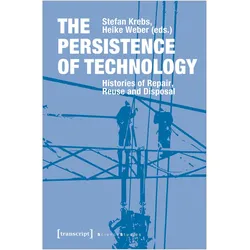
The Persistence of Technology, Fachbücher von Stefan KrebsReparatur, Wiederverwendung und Entsorgung sind eng miteinander verbundene Phänomene, die mit der Lebensdauer und Beständigkeit von Technologien zusammenhängen. Wenn technische Artefakte alt und abgenutzt werden, müssen Entscheidungen getroffen werden: Ist es notwendig, sinnvoll oder sogar möglich, sie instand zu halten und zu reparieren, wiederzuverwenden oder abzubauen, oder müssen sie entsorgt werden? Diese Entscheidungen hängen von Faktoren wie der Verfügbarkeit von Second-Hand-Märkten, Reparaturinfrastrukturen und Abbau- oder Entsorgungseinrichtungen ab. Indem die Geschichten von Chinas Stromnetz, kanadischen Telefonen, deutschen Automobilen und Indiens Schiffsabbruchgeschäft erzählt werden, heben die Beiträge in diesem Band die Beständigkeit von Technologien hervor und zeigen, dass Wartung und Reparatur in modernen Industrien und Konsumgesellschaften nicht obsolet sind.36,42 €*Versand: 0,00 €Sichere Weiterleitung zum Anbieter
-
Wie viele Töne umfasst eine diatonische Tonleiter? Kannst du die sieben Töne einer Dur-Tonleiter nennen?
Eine diatonische Tonleiter umfasst sieben Töne. Die sieben Töne einer Dur-Tonleiter sind: C, D, E, F, G, A, H. **
-
Wie viel Töne hat eine Tonleiter?
Wie viel Töne hat eine Tonleiter? Eine Tonleiter besteht in der Regel aus sieben Tönen, wobei jeder Ton einen bestimmten Abstand zum nächsten hat. Diese Abstände sind entweder ganz- oder halbtonschritte. Die Tonleiter bildet die Grundlage für die Harmonie und Melodie in der Musik und wird oft als Grundlage für Kompositionen verwendet. Es gibt verschiedene Arten von Tonleitern, wie z.B. die Dur- und Moll-Tonleiter, die jeweils unterschiedliche Klangfarben und Stimmungen erzeugen. Insgesamt hat eine Tonleiter also sieben Töne, bevor sie sich wiederholt. **
-
Warum hat die Tonleiter sieben Töne?
Die Tonleiter besteht aus sieben Tönen, da sie auf dem Prinzip der diatonischen Skala basiert. Diese Skala besteht aus fünf ganzen Tönen und zwei Halbtönen, die in bestimmten Abständen zueinander angeordnet sind. Dieses System ermöglicht eine harmonische und melodische Strukturierung von Musikstücken. **
-
Wie viele Töne hat eine Dur Tonleiter?
Eine Dur Tonleiter besteht aus insgesamt sieben Tönen. Diese Töne sind nach einem bestimmten Muster angeordnet, das aus ganzen und halben Tönen besteht. Die Dur Tonleiter ist die Grundlage vieler Musikstücke und wird häufig in der westlichen Musik verwendet. Jeder Ton in der Dur Tonleiter hat eine spezifische Funktion und trägt zur Harmonie des Stücks bei. Die Dur Tonleiter ist eine der grundlegendsten Tonleitern in der Musiktheorie und dient als Ausgangspunkt für das Verständnis von Harmonie und Melodiebildung. **
* Alle Preise verstehen sich inklusive der gesetzlichen Mehrwertsteuer und ggf. zuzüglich Versandkosten. Die Angebotsinformationen basieren auf den Angaben des jeweiligen Shops und werden über automatisierte Prozesse aktualisiert. Eine Aktualisierung in Echtzeit findet nicht statt, so dass es im Einzelfall zu Abweichungen kommen kann. ** Hinweis: Teile dieses Inhalts wurden von KI erstellt.